

The Pistol Brace Rule in 2026, Current Legal Status State by State
Posted by Jeremy Mallette on Sep 22nd 2026
Your Glock with a brace on it is not an illegal rifle. It hasn't been since a Texas court threw out the ATF's 2023 rule. But "not illegal" and "settled" are two different things, and a few court cases moving right now are worth understanding before you buy, sell, or travel with a braced pistol.
The short version.
- A braced pistol is classified as a pistol under federal law today, not a short-barreled rifle.
- No registration, tax stamp, or paperwork is required because of the 2023 rule. That rule is dead.
- ATF still watches configurations built to be fired from the shoulder, brace or no brace.
- State law can still restrict brace-equipped builds regardless of what federal courts decided. Check your state below.
The federal answer, and the part people miss
Federal law treats a braced pistol as a pistol. A federal court vacated the ATF's brace rule on June 13, 2024, and the government dismissed its appeal in July 2025, so the rule has no legal force. No registration. No tax stamp. No paperwork tied to that 2023 rule.
Here's the part people skip past. The underlying National Firearms Act still exists, and a firearm with a barrel under 16 inches and an overall length under 26 inches that's built to fire from the shoulder is still an SBR under that statute, regardless of what happened to the brace rule. The court didn't erase the NFA. It erased the specific test ATF wrote in 2023 for deciding which braced guns counted as rifles.
And the agency hasn't fully backed off either. ATF stated in 2026 court filings that it retains case-by-case authority under the underlying NFA for configurations that appear clearly designed to be fired from the shoulder. A pistol with a brace on it, built the way braces are meant to be used, isn't what that authority targets. A gun dressed up to look and function like a short rifle is a different story.
The two year fight, in order
ATF published the original rule, Final Rule 2021R-08F, on January 31, 2023. It reclassified most braced pistols as short-barreled rifles overnight and gave owners 120 days to register, remove the brace, swap to a 16-inch barrel, or destroy the gun.
The rule ran to roughly 300 pages and leaned on six factors to decide whether a braced firearm counted as a rifle. Weight and overall length, length of pull, the type of sights installed, whether the design matched attachments meant for a shoulder stock, how the manufacturer marketed the product, and how the gun was actually being used in the field all fed into the analysis. Two visually identical guns could land on opposite sides of the line depending on marketing photos or a sales listing, which is largely why courts eventually called the rule too vague to enforce fairly.
The rule barely survived a year in practice. It was vacated on June 13, 2024, by the U.S. District Court for the Northern District of Texas in Mock v. Garland, and the Eighth Circuit reached a similar conclusion two months later in FRAC v. Garland. The government appealed Mock, then dismissed its own appeal in July 2025, letting the vacatur stand for good.
On May 6, 2026, ATF proposed formally deleting the brace language from its regulations at 27 CFR 478.11 and 479.11, and that rulemaking is still pending. Until it's finalized, the regulatory text on paper hasn't caught up with the reality on the ground. That's a paperwork gap, not a legal risk to you.
For the fuller walkthrough of how a brace differs from a stock in the eyes of the law, our Glock conversion kit legality guide covers the distinction in more depth.
If you registered during the 2023 amnesty
Owners who registered a braced pistol as an SBR during the 120-day window between January 31 and May 31, 2023, hold a tax-free NFA registration on that firearm. Nothing about the vacatur changes that registration or requires you to do anything with it. It stands on its own, separate from the rule that prompted it, and it stays valid if you ever transfer the firearm through the normal NFA process. If you're weighing whether to keep the registration or ask about removing it now that the rule's gone, that's a conversation for a firearms attorney or a licensed NFA dealer, not a decision to make off a blog post.
The ruling everyone confuses with this one
On August 5, 2026, a different case landed that owners keep mixing up with the brace rule. Judge James Wesley Hendrix in the Northern District of Texas ruled in Silencer Shop Foundation v. ATF, consolidated with Jensen v. ATF, that because the NFA was enacted under Congress's taxing power and the tax on these items is now zero, the registration and approval scheme for them can no longer stand. The ruling reaches SBRs, short-barreled shotguns, suppressors, and AOWs.
Don't read that as a free-for-all. The court declined to issue nationwide relief, citing the Supreme Court's 2025 decision in Trump v. CASA, so the relief only reaches the parties in that case and people connected to them. The court also stayed its own injunction for seven days to give the government a chance to seek appellate relief, and unless another court stepped in, the injunction became operative around August 13.
This case is about NFA registration mechanics for a narrow set of plaintiffs. It isn't the thing that made your braced pistol legal again. That was Mock v. Garland, back in 2024. Keep the two straight when you're reading about this online. A lot of sites aren't.
What still might get you in trouble
ATF's case-by-case authority isn't hypothetical. If a "pistol" has a brace, a long buffer tube, a vertical grip, and every visual cue of a stock, and someone's photographed shooting it from the shoulder in your own marketing material, that's the configuration the agency is watching. Stick to a brace used as a brace and you're not the target here. Our pistol brace performance and legality guide walks through what a compliant setup looks like in practice.
State by state
Federal vacatur doesn't touch state law. A group of states plus Washington D.C. run some form of independent restriction that can catch a braced pistol or the AR-style or AK-style host it's built on, separate from anything a Texas court decided.
| State | Status |
|---|---|
| California | Reaches braced AR-style and AK-style pistols through a feature test on semiautomatic rifles that accept a detachable magazine. A pistol grip, threaded barrel, or similar feature can trip the test regardless of federal brace status. |
| Connecticut | Names an arm brace directly as a listed assault weapon feature, so a braced AR-pattern pistol is restricted either way under state law. |
| Delaware | Maintains restrictions on covered rifle configurations that can reach a braced pistol host. |
| Hawaii | Bans covered configurations outright, independent of federal brace status. |
| Illinois | Names arm braces in statute and bans possession of covered configurations, with narrow exceptions. Among the strictest states on this list. |
| Maryland | Classifies qualifying semiautomatic rifles under a separate "copycat weapon" test rather than the federal SBR framework, which can catch a braced build even though state police may treat the specific firearm as a handgun in some cases. |
| Massachusetts | Reaches braced AR-style pistols through a two-feature assault-style firearm test. Short-barreled rifles are permitted with full NFA compliance and a Class A License to Carry, which is a narrower path than most states on this list offer. |
| New Jersey | Bans covered configurations under its own feature test, independent of federal status. |
| New York | Bans covered configurations under its own feature test, independent of federal status. |
| Rhode Island | Recently tightened its law and now bans short-barreled rifle configurations outright, though its assault weapons statute may not reach a firearm that remains classified as a pistol. This is a genuinely close call. Confirm current status before you build or travel here. |
| Virginia | Enacted a two-feature assault firearm ban in 2026 that names an arm brace or similar rearward attachment directly, but a statewide preliminary injunction (Santolla v. Katz) currently blocks enforcement through at least mid-2027 or a final court ruling. Not in force today, but worth watching given active litigation. |
| Washington | Restricts sale of covered configurations through its own feature test but does not require registration of firearms already possessed. |
| Washington, D.C. | Bans covered configurations outright. |
| All other states | Generally follow the federal treatment described above (braced pistol is a pistol, not an SBR), though local magazine capacity, overall length, and assault weapon statutes can still apply to a given build. Verify your specific state statute, since these rules shift. |
This table reflects the jurisdictions with the clearest independent restrictions as of the date at the top of this article. State legislatures and courts move fast on this topic, Virginia's own law changed status twice in the space of a month. Treat this as a starting point, not a substitute for checking your own state's current statute, especially if you're traveling with a braced pistol across state lines.
Crossing state lines with a braced pistol
Most trouble happens at the border of a restricted state, not on your own range. Before a road trip, check the destination state's current statute yourself rather than trusting a forum post from last year, since several of the states above have moved their own lines in 2026 alone. Keep your firearm cased and unloaded during transport per federal transport law, and keep documentation of when and where you bought the pistol and brace on hand. If an officer questions the configuration, stay calm, answer plainly, and avoid arguing legal theory on the roadside. If you're regularly crossing into or through a restricted state, that's worth a short conversation with a firearms attorney in that state before it becomes a roadside problem instead of a planning one.
What this means if you own or are buying a brace
You don't owe ATF a form for owning a braced pistol today. You're not required to register it, and you don't need a tax stamp tied to the 2023 rule. What you should still do is keep the brace looking and functioning like a brace, know your home state's law before you build, and check the law again before you cross into a state on that restricted list.
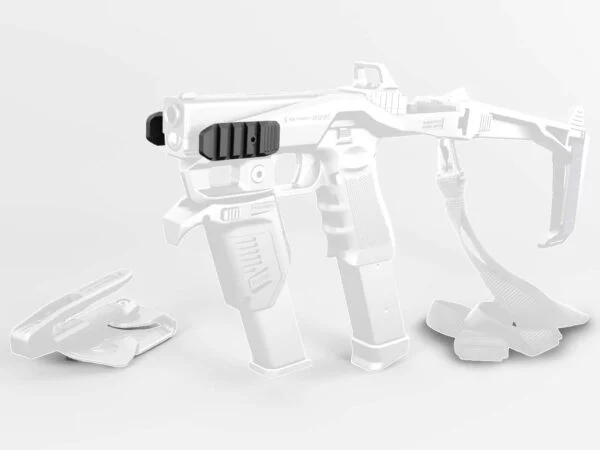
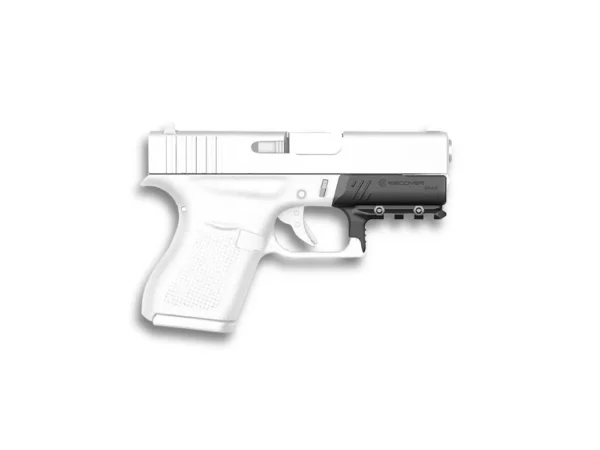
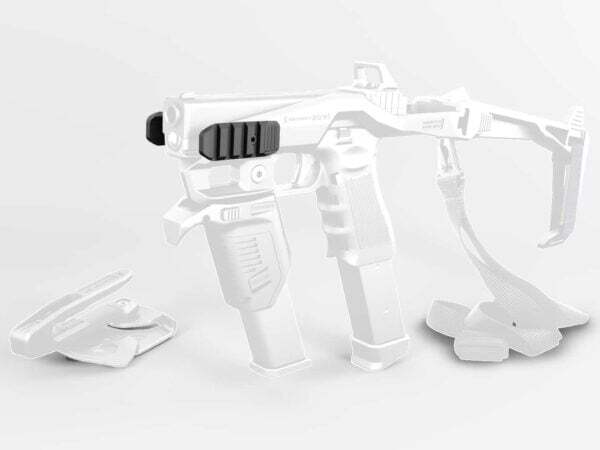
Browse the full stabilizer kit lineup, including the 20/20N stabilizer kit and the S-PRO conversion kit, to see which brace-equipped platform fits your pistol.
FAQ
Do I need to register my braced pistol?
No. The rule that would have required this was vacated in 2024 and the government dropped its appeal in 2025.
Can I shoulder my braced pistol?
Occasional shouldering hasn't been the enforcement trigger. A configuration built to be fired from the shoulder as its primary function is the thing ATF says it can still evaluate under the NFA statute itself.
What happens if I travel with a braced pistol to California or New York?
Federal status doesn't override state law. Check the destination state's statute on covered configurations before you go, and treat this as a question for a firearms attorney if your build is unusual.
Am I still covered if I registered my brace during the 2023 amnesty?
Owners who registered during that window hold a tax-free SBR registration. That registration stands on its own, separate from the vacated rule.
Is the 2023 rule officially repealed yet?
Not on paper. ATF proposed deleting the rule's language from federal regulations in May 2026, and that rulemaking is still pending. The rule has had no legal force since the 2024 vacatur regardless of where the paperwork stands.
Check what fits your pistol. Find Your Kit
Current as of September 22nd, 2026. This is not legal advice. ATF and NFA laws change quickly, and it's up to each owner to know the rules where they live. Recover Tactical is not responsible for misuse of our products.
Sources
- Federal Register, Factoring Criteria for Firearms With Attached Stabilizing Braces (January 31, 2023)
- Federal Register, Removing Factoring Criteria for Firearms With Attached Stabilizing Braces, proposed rule (May 6, 2026)
- Firearms Policy Coalition, Mock v. Bondi case docket and filings
- Wiley LLP, NFA Court Ruling Reshapes Compliance Following Silencer Shop Foundation v. ATF (August 2026)