

Walther PDP: Performance Analysis and Upgrade Potential for Tactical Shooters
Posted by Jeremy Mallette on Jan 6th 2026
The Walther PDP landed with serious momentum. When a manufacturer known for engineering excellence releases what they call their "Performance Duty Pistol," shooters pay attention. This isn't another incremental update - Walther built the PDP from the ground up to address specific feedback from professional users and competitive shooters who demanded more from their striker-fired pistols. Since its 2021 release, the PDP has carved out a reputation that sits between the ergonomic excellence of the PPQ and the duty-ready reliability that professionals expect. The question most new owners ask? Whether the PDP delivers on its performance promises, and how it stacks up against established competitors. Here's what you need to know: the Walther PDP brings legitimate improvements to trigger dynamics, grip ergonomics, and sight acquisition. Understanding where it excels - and where modular upgrades can push performance further - requires looking beyond marketing material.
What Makes the Walther PDP Different From Previous Walther Platforms
Walther didn't just refresh the PPQ with new slide serrations. The platform incorporates fundamental changes to how the pistol interfaces with the shooter's hand and how controls fall under natural manipulation. The SuperTerrain slide serrations run the full length in three distinct zones. When your hands are wet, gloved, or under stress, these aggressive serrations provide purchase where smooth slides fail. The texturing creates friction without tearing up your hands during extended sessions. Walther moved the trigger further forward in the frame. This repositioning changes the leverage point and reduces the amount of finger needed on the trigger face. Shooters with smaller hands gain better control. Those with larger hands can manipulate the trigger with the pad rather than the joint. The Performance Duty Trigger operates with a consistent 5.5-pound pull weight and a short reset that competitive shooters appreciate. There's minimal take-up before you hit the wall, and the break is clean without creep. This sits in that sweet spot where the trigger is light enough for accuracy work but heavy enough to meet safety standards. Magazine release positioning follows an ambidextrous design, but Walther went further by making it reversible and adjustable. You can swap the button to either side and adjust its height to match your grip and hand size.
Real-World Performance Across Different Shooting Disciplines
The PDP's design priorities become clear when you run it through different applications. Understanding where it performs best helps you determine if it matches your shooting needs. Competitive Shooting Applications: The PDP shows up regularly in USPSA Production and Carry Optics divisions. The trigger gives you the clean break that matters when pushing speed, and the grip angle promotes fast sight acquisition between transitions. The pistol tracks well during rapid fire - grip texture and bore axis keep the dot returning to target consistently. Where the PDP particularly shines? Stage planning involving prone or barricade positions. Extended slide serrations mean you can rack the slide from almost any position without adjusting grip. Home Defense Considerations: The PDP's ergonomics translate well to high-stress defensive scenarios. Grip texture provides solid retention without requiring a death grip, which matters when adrenaline hits and fine motor skills degrade. The 18-round capacity in full-size models gives you more ammunition than many competing platforms. When selecting a home defense pistol, that capacity removes one variable from the stress equation. Concealed Carry Profile: The compact models (4-inch barrel variants) balance concealability with shootability better than many compact pistols. Walther kept the compact PDP's grip short enough for appendix carry while maintaining enough purchase for proper control. The slide width measures 1.0 inches - slim enough for comfortable inside-the-waistband carry but not so thin that the pistol feels insubstantial.
Comparing the PDP to Established Tactical Pistol Platforms
Glock 17/19 Comparison: The Glock dominates market share for good reasons. The PDP challenges Glock primarily on ergonomics and trigger quality. Where Glock built a pistol that works for everyone adequately, Walther built one that fits most shooters exceptionally well. The PDP's grip feels more refined. The texturing provides better purchase without the aggressive sandpaper feel of Gen 5 Glocks. The trigger operates with less creep and a crisper break. Where Glock maintains its advantage? Aftermarket support remains unmatched. The PDP's aftermarket is growing but hasn't reached that level of depth. CZ P-10 Series Analysis: The PDP and P-10 share similar design priorities. The PDP edges ahead on customization options straight from the factory. The adjustable magazine release and multiple grip back-strap options give you more fitting flexibility than the P-10's fixed configuration. Trigger preference between these platforms comes down to individual feel. The PDP's trigger has a slightly shorter reset, while the P-10's trigger breaks at a marginally lighter weight. SIG P320 Evaluation: The P320's modular design differs fundamentally. SIG built a pistol where you can swap components between different configurations. The PDP takes a different path - Walther optimized a single platform for specific performance metrics rather than building in modularity.
Common Modifications That PDP Owners Implement
The PDP ships with features that many competing pistols require aftermarket upgrades to achieve. Still, certain modifications can optimize the platform for specific applications. Optics Selection: Most PDP owners add a red dot optic to take advantage of the factory optics cut. The platform ships with adapter plates for multiple footprints. Popular choices include the Trijicon RMR for durability and the Holosun 507C for its features-to-price ratio. Trigger Upgrades: The factory trigger performs well enough that many shooters don't modify it. Those who do typically swap in aftermarket triggers from Apex or Timney to reduce pull weight slightly or change the trigger shoe geometry. Light and Laser Integration: The PDP's Picatinny rail accepts standard weapon lights. Most owners running the pistol for home defense or duty use add a Streamlight TLR-1 or SureFire X300.
How Stabilization Systems Change PDP Handling Dynamics
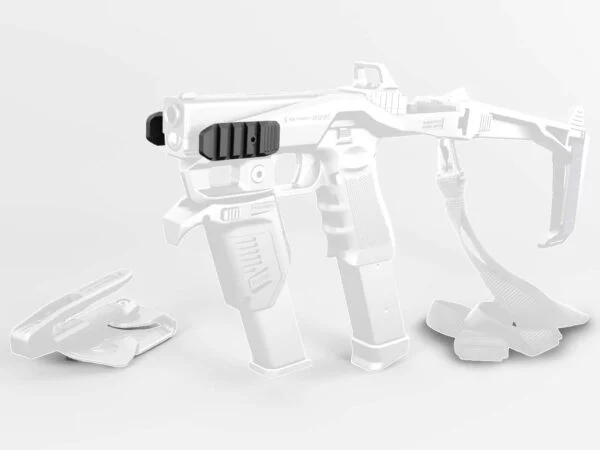
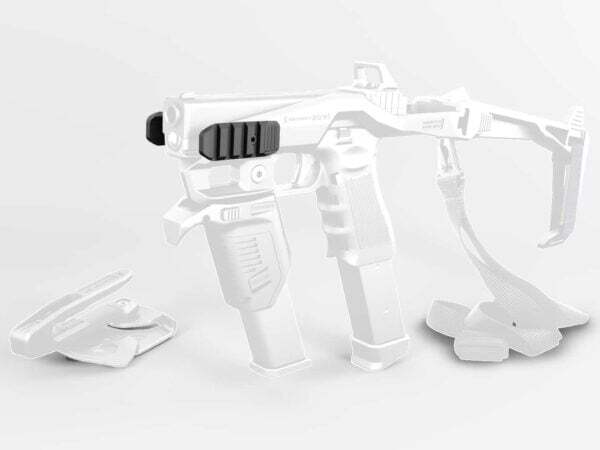
Understanding how stabilization systems work requires stepping back from specific products to look at mechanical principles. When you add a stabilization system to a pistol like the PDP, you're fundamentally changing how the firearm interfaces with your body and how recoil energy gets distributed. A pistol without stabilization relies entirely on your grip strength and wrist stability to control recoil. The firearm pivots around your grip, and all that energy transfers through your hands and arms. This works, but it limits how quickly you can get back on target. Adding a stabilization platform changes this equation. Now you have three points of contact instead of two - both hands on the grip plus the stabilizer against your body. This triangular brace point doesn't eliminate recoil, but it redirects how that energy moves. Instead of the pistol rotating upward around your grip, the stabilizer helps drive the pistol straight back. The practical effect? Faster sight acquisition between shots. Less muzzle flip. More consistent accuracy, especially at distances beyond typical pistol engagement ranges. Shooters report being able to maintain sight picture through the recoil impulse rather than having to reacquire after each shot. This matters most when you're running drills that emphasize speed and accuracy together. Bill drills, El Presidente, failure drills - any exercise where you need rapid, accurate shot placement shows the difference. For PDP owners specifically, the platform's existing strengths get amplified. The pistol already tracks well and has good ergonomics. Adding stabilization takes those characteristics and extends them.
Installation Considerations for PDP Conversion Systems
Installing a stabilization system on your PDP doesn't require gunsmithing skills or specialized tools. Most systems follow a simple process. The typical installation sequence: First, verify your pistol is unloaded and remove the magazine. Field strip the PDP down to its major components - slide, barrel, recoil spring, and frame. Most stabilization systems use the frame as the attachment point. Alignment matters. The frame needs to seat completely into the chassis with all mounting points making solid contact. A properly designed system will guide the frame into place without requiring excessive force. Next, secure the frame using the provided mounting hardware. This typically involves screws or pins that lock the frame into the chassis. Tighten these fasteners to the specified torque. Once the frame is secured, reassemble the slide components. The slide should operate smoothly on the frame just as it did before installation. Rack the slide several times to verify proper function. Common installation mistakes to avoid: forcing components that don't align naturally, over-tightening fasteners, and failing to verify function before heading to the range.
Choosing Compatible Upgrade Paths for the PDP Platform
Not all upgrade systems work with all pistols. Understanding compatibility requirements saves you from buying equipment that won't fit your specific PDP variant. Frame size represents the primary compatibility consideration. The PDP comes in multiple sizes - full-size, compact, and sub-compact variants. Stabilization systems designed for full-size frames won't fit compact models. Rail configuration also matters. The PDP uses a standard Picatinny rail, but rail length varies between models. Some stabilization systems integrate with the rail while others mount independently. Optics compatibility requires attention. If you're running a red dot on your PDP, make sure the stabilization system provides adequate clearance for your optic. Weight distribution changes when you add a stabilization system. A properly designed system will shift weight rearward slightly, which actually improves balance for most shooting positions. Material quality separates professional-grade systems from recreational ones. Polymer chassis work fine for range use, but aluminum or reinforced polymer construction provides the durability that high-volume shooters need.
Legal Considerations When Modifying Your PDP
Firearm modifications exist within a legal framework that varies by jurisdiction. Understanding basic principles helps you make informed decisions, though you should always consult local regulations and qualified professionals for specific guidance. Most stabilization systems designed for pistols maintain pistol classification when properly installed. They provide stability and control without adding features that would trigger reclassification under federal regulations. However, some configurations - particularly those involving certain stock types - may require additional compliance steps. State and local regulations add another layer. Some jurisdictions restrict specific features or require additional registration for certain configurations. Before modifying your PDP, research your local requirements thoroughly. Here's the practical approach: work with reputable manufacturers who understand regulations and design systems for compliance. Read the documentation that comes with any system you purchase. When in doubt about whether a specific configuration meets legal requirements, consult qualified legal professionals familiar with firearms law in your jurisdiction.
Maintaining Your PDP With Added Components
Adding a stabilization system introduces new maintenance requirements beyond standard pistol care. The interface points between your PDP's frame and the stabilization chassis need regular inspection. After every few hundred rounds, remove the pistol from the chassis and check for wear at contact points. Look for polymer deformation, screw looseness, or any signs that components are shifting during use. The stabilization system itself requires cleaning similar to how you'd maintain any firearm accessory. Carbon buildup and powder residue accumulate on surfaces near the ejection port. Use standard gun cleaning solvents to remove this buildup. Accessory mounting points need attention too. Screws that secure lights, optics, or other accessories can work loose from repeated firing. Check these fasteners regularly.
Training Considerations for Modified PDP Configurations
Running your PDP with a stabilization system requires some adjustment to your shooting technique, particularly if you've spent significant time training with a standard pistol configuration. Draw technique changes when you add bulk to your pistol. The system extends forward and possibly rearward, which affects how the firearm clears your holster. Practice your draw slowly, focusing on consistent hand placement and smooth clearance. Presentation to target feels different. The added stability means you can acquire sights or your red dot more quickly, but you need to trust this and not over-correct. Let the system do its work - focus on consistent grip pressure and trigger control. Shooting positions open up with added stability. Prone shots, weak-hand shooting, and off-angle engagements become more manageable. Spend time practicing these positions to understand how the system affects your capabilities.
Making the Upgrade Decision for Your PDP
Determining whether to add a stabilization system to your Walther PDP depends on your specific shooting needs and how you actually use the pistol. The strongest case for adding stabilization comes from shooters who regularly engage targets beyond typical defensive pistol distances. If you're running drills at 25-50 yards, competing in matches with longer-range stages, or training for roles that might require extended-range pistol work, stabilization provides measurable benefits. For range training and skill development, stabilization systems offer clear advantages. They let you push your capabilities further, work on accuracy at distance, and develop consistency that transfers back to standard pistol shooting. Budget factors into the decision. Quality stabilization systems represent a significant investment, though often less than buying a dedicated pistol-caliber carbine. If you already own a PDP you shoot well, adding a system costs less than purchasing and learning a completely different platform. Testing before committing helps clarify the decision. Many ranges offer rentals or demo days where you can shoot pistols configured with stabilization systems. Spending time behind a modified pistol gives you real data about whether the benefits justify the investment for your specific needs. The Walther PDP already delivers performance that exceeds many competing platforms in its stock configuration. Adding stabilization takes what Walther engineered and extends it further - faster transitions, better accuracy at distance, and more control across varied shooting positions. Whether those benefits matter enough to justify modification depends entirely on what you need your pistol to do.