I didn’t expect to like it.
The first time I held a Glock 22, I was in a crowded indoor range with foam plugs in my ears and uncertainty in my grip. It felt big—slightly top-heavy, firm in the hand, unapologetic. A full-size .40 S&W? I’d read about the recoil, the “snappy” feel that made some shooters flinch. But I pressed forward, cued up my stance, and sent the first round downrange.
And that’s when everything changed.
Was it perfect? Far from it. But something about the experience stuck with me—the controlled chaos, the raw punch of the .40 S&W, the way the pistol felt like it had been designed to do one thing well: perform under pressure. It was brutal and honest. No frills. No apology.
So why talk about the Glock 22 now, after decades of service and more modern options on the market?
Because it still holds its ground.
Whether you’re a law enforcement officer who trusted it on your belt, a home defender looking for a no-nonsense solution, or a tinkerer obsessed with aftermarket upgrades, the Glock 22 occupies a unique space. It’s not quite a Glock 17, not quite a 23. It’s a midpoint—a muscle memory tool with a reputation carved into the polymer and steel.
But here’s the part people don’t talk about: the Glock 22 doesn’t have to stay in stock.
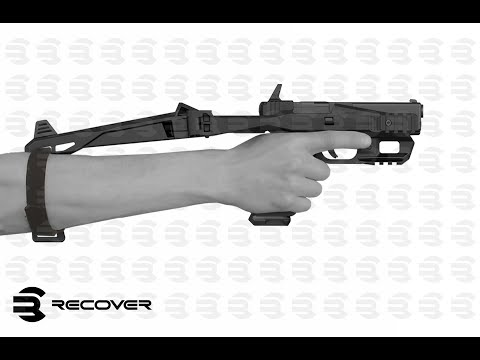
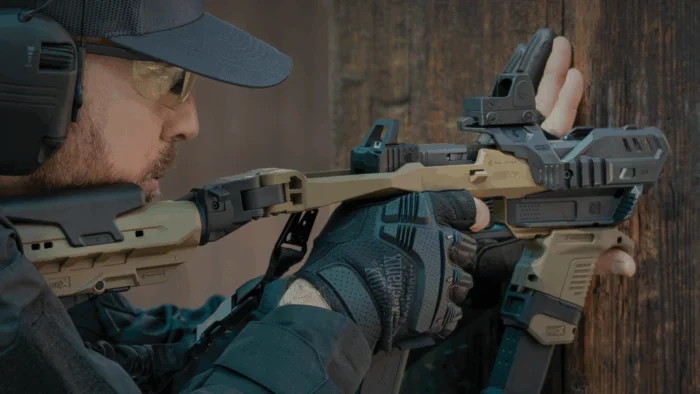
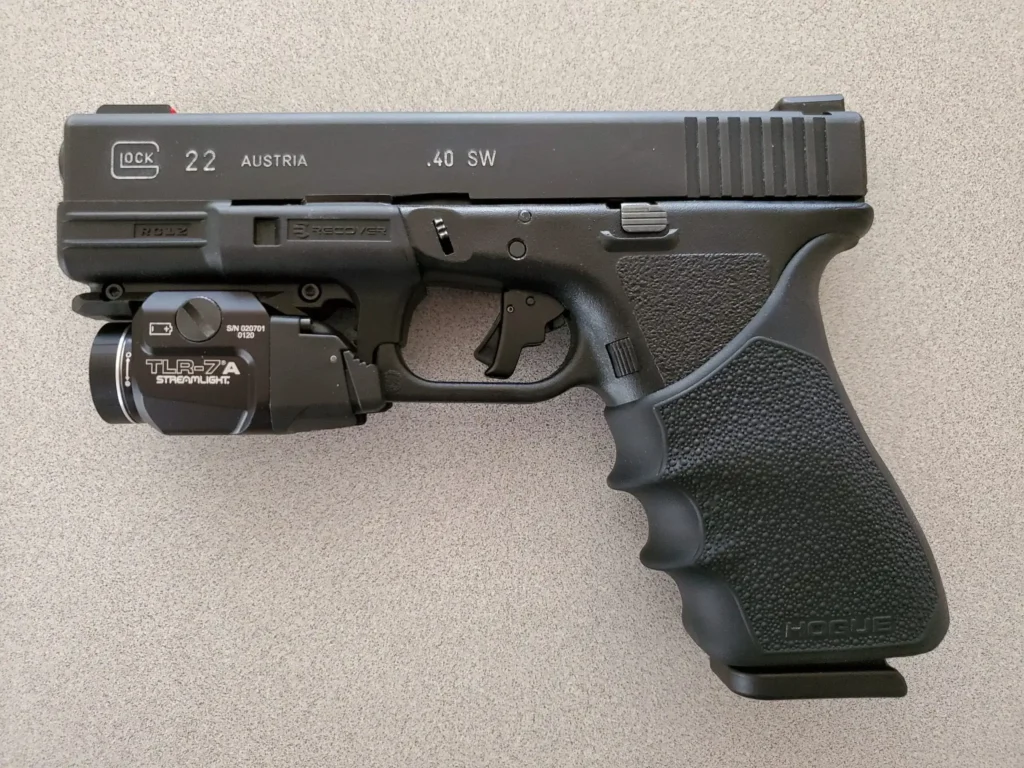
With the right gear—like Recover Tactical’s 20/20 Stabilizer Kit—this pistol transforms. From control to confidence, from snappy to stable. The kind of shift you feel instantly.
In this guide, I’m not just going to walk you through the specs. We’re going deeper—past the numbers, into real-world application, and the mods that make this gun work for your world.
Ready? Let’s get into it.
Glock 22 Overview – The Duty-Grade Workhorse
People assume the Glock 22 is just a .40-caliber version of the 17.
It’s not.
That comparison shows up everywhere—forums, gun counters, even among some instructors. But here’s the truth: while the Glock 22 shares a frame size with the 17, the shooting experience is entirely different. And if you’ve ever run both side-by-side, you’ve probably noticed it, too. The recoil impulse hits faster, the muzzle rise has a different rhythm, and the post-shot reset demands more focus.
That difference is what makes the Glock 22 special—and misunderstood.
Built for Service, Trusted for Decades
Originally designed to meet U.S. law enforcement demands during the .40 S&W boom, the Glock 22 quickly became the standard issue for agencies across the country. It wasn’t about trendiness. It was about balancing firepower and reliability. Officers needed a sidearm with more punch than a 9mm, but without the capacity limitations of a .45.
So Glock delivered a full-size frame, chambered in .40, with a 15-round standard mag and the same signature durability that earned their reputation. Drop it, drag it, feed it whatever ammo’s in the locker—it runs.
Generational Tweaks That Matter
Gen 3. Gen 4. Gen 5. They all say “Glock 22” on the slide, but they’re not interchangeable when it comes to feel, fit, and compatibility.
- Gen 3: Simpler internals, less aggressive grip texture, standard rail. Common in police trade-ins, which makes them affordable—but limited in aftermarket rail compatibility.
- Gen 4: Swappable backstraps, dual recoil spring for better control, improved mag release. A go-to for shooters who want refinement without going full modern.
- Gen 5: Glock Marksman Barrel, flared magwell, no finger grooves, ambi slide stop. Shoots smoother and feels more balanced—but holster compatibility can be hit-or-miss if you’re used to older models.
All three generations are out there in the wild. And if you’re shopping used or planning upgrades, knowing the distinctions saves headaches.
Why the Glock 22 Still Holds Up
The market’s flooded with newer options, but the Glock 22 keeps its place for a reason. It’s one of the few handguns that delivers a real balance—power, capacity, and consistency. It’s also a blank canvas. From recoil springs to slide milling, the platform is endlessly modifiable. That’s part of its charm for the DIY crowd.
The .40 S&W Factor
Let’s talk about recoil. Not in abstract terms. Not in ballistics charts. I mean the actual moment your finger moves and the slide kicks back.
That’s where the .40 S&W lives.
Why It Was Created in the First Place
Most shooters know the story, or parts of it: after the infamous 1986 FBI Miami shootout, federal agencies began rethinking handgun calibers. The 9mm didn’t quite stop the threat. The 10mm hit too hard and required frames too large for small-handed agents. So Smith & Wesson, working with the FBI, split the difference.
The result? .40 Smith & Wesson—more punch than 9mm, better control than 10mm. A law enforcement sweet spot. And Glock? They were ready. The Glock 22 chambered it perfectly, offering capacity and stopping power in a duty-sized frame that officers could rely on under pressure.
What the Recoil Really Feels Like
Is it snappier than a 9mm? Yes.
Does it kick like a .45? No.
It’s that in-between sensation—sharp but manageable, fast but firm. For new shooters, it can feel aggressive, especially in follow-up shots. That’s where grip technique, recoil spring tuning, and frame enhancements can make or break the experience.
I’ve worked with shooters who loved the .40 immediately. I’ve also seen others flinch through full mags before they learned to ride the recoil. It’s personal. And that’s the point. This round isn’t for everyone—but for those who click with it, it becomes second nature.
Ammunition Realities: Availability, Cost, and Consideration
Let’s address the elephant in the room: .40 isn’t as available—or as cheap—as 9mm.
Most gun counters will have it, sure, but when prices fluctuate, .40 tends to jump higher and stay there longer. This matters, especially for shooters on a budget or those trying to train consistently. One weekend at the range can run you noticeably more than if you’d brought a 9mm.
But here’s the trade-off: for those using the Glock 22 as a home defense or duty gun, the cost-per-shot may not matter as much. You’re buying security. You’re investing in a caliber that has real-world track records of stopping threats.
And for those who reload? .40 S&W sits in that golden zone—easier than 10mm, less temperamental than some high-pressure 9mm loads.
The Middle Child, the Workhorse
It doesn’t get the same love online. It doesn’t win cool points like custom 2011s or micro-comped 9mms. But there’s something to be said for the .40 S&W’s legacy—and its staying power.
For the Glock 22, it’s not just a chambering. It’s the identity. A balance of force, follow-up, and function that still earns respect where it counts.
Strengths and Shortcomings of the Glock 22
Let’s stop pretending there’s a perfect pistol.
Every handgun is a series of trade-offs—comfort vs. capacity, power vs. control, modularity vs. simplicity. And the Glock 22? It leans into its role with full awareness. It doesn’t try to be trendy. It tries to be useful. And that’s exactly where its strength lies.
| What The Glock 22 Gets Right | What The Glock 22 Doesn't Do Well |
|---|---|
|
✔
Reliability
It's a Glock. Enough said? Maybe—but I'll go further. I've seen them survive mud, sand, snow, trunk carry, and year-round holster use. When you need it to go bang, it does. |
✘
Recoil Management—Stock
Let's be real. A factory Glock 22 with standard springs and a slick grip surface isn't doing you favors during rapid fire. New shooters especially feel the sting in their palms and groups. |
|
✔
Capacity with Authority
A full-size .40 S&W that holds 15+1 rounds isn't just respectable—it's practical. You get serious firepower without dipping into oversized magazine territory. |
✘
Concealed Carry
It's big. You can try IWB, sure, but after a few hours you'll notice the weight, the printing, the sweat line. There are better options for daily carry. |
|
✔
Simplicity
Fewer moving parts, intuitive takedown, predictable trigger reset. For training, duty, or emergency scenarios, the Glock 22's design favors consistency under stress. |
✘
Ammo Cost
It adds up. A few cents more per round doesn't seem like much—until you're burning through 200 rounds at a weekend session. |
|
✔
Aftermarket Playground
Sights, triggers, barrels, internal springs—you can tweak everything. If you're the type who likes to mod, this platform is wide open. |
✘
Gen-Specific Limitations
Older Gen 3 models might lack rail support for newer lights. Gen 5 slides may not play nicely with legacy holsters. These quirks matter if you're building a full loadout. |
|
✔
Versatility
Home defense. Range training. Duty carry. The Glock 22 slots into each role with minimal adjustment. |
✘
Ergonomics for Smaller Hands
The grip angle, combined with the frame size and snappy recoil, isn't ideal for everyone. Especially shooters who are used to 9mm compacts. |
So Where Does That Leave Us?
In a word: purposeful.
The Glock 22 isn’t trying to impress on Instagram. It’s not whispering about sub-MOA groups or modular grip inserts. It’s a work gun. A go-to. The kind of pistol that fades into the background until it’s needed—and then delivers.
If you want reliability with bite, if you’re willing to master the recoil instead of outsourcing it to compensators and optics, then the Glock 22 won’t disappoint.
But if you’re looking for comfort, concealability, or “out-of-the-box perfection,” you’ll feel the limitations quickly.
And maybe that’s the point—it invites you to grow into it, not around it.
Glock 22 vs. Other Glock Models
You might be wondering—if the Glock 22 is solid, why not just get a Glock 17? Or if .40 S&W is what you want, why not shrink it down to a Glock 23?
Fair questions. Let’s unpack the assumptions and clarify where each model stands in the lineup.
Glock 22 vs. Glock 17 (9mm)
At a glance, they’re nearly identical in size. Same frame dimensions. Same general feel. But once you squeeze the trigger, the differences become hard to ignore.
| Category | Glock 22 (.40 S&W) | Glock 17 (9mm) |
|---|---|---|
|
Recoil and Control
|
More aggressive recoil and muzzle rise. Requires more effort for follow-up shots and recovery between rounds. |
The 9mm Glock 17 is gentler, period. Faster follow-up shots, less muzzle rise, easier recoil recovery. For high-volume training or competition-style drills, that matters. A lot. |
|
Stopping Power and Punch
|
The .40 S&W from the Glock 22 hits harder. There's more force transferred into the target—and into your hand. For those prioritizing defense or duty-level energy, that added punch is worth it. |
Less stopping power per round, but the superior control allows for faster, more accurate follow-up shots when needed. |
|
Ammunition Cost
|
Higher cost per round, less widely available. The price difference becomes noticeable during extended training sessions. |
9mm wins. Lower cost, wider availability, easier to stockpile. The difference shows up most during extended training sessions. |
|
Longevity and Wear
|
Higher stress on internal components due to more powerful cartridge. May require more frequent parts replacement over time. |
A Glock 17 generally endures longer between parts replacement, simply because 9mm generates less stress on internals over time. |
Verdict? If comfort, affordability, and ease of use are your priorities, the 17 makes sense. But if you’re after serious stopping power in a duty-sized frame, the Glock 22 earns its place.
Glock 22 vs. Glock 23 (Compact .40 S&W)
They fire the same caliber. They share magazines. On paper, they look interchangeable.
But here’s the reality: the Glock 23 is a compromise—smaller footprint, yes, but with less control and lower capacity. And when it comes to shooting .40 S&W, control is everything.
| Category | Glock 22 (Full Size) | Glock 23 (Compact) |
|---|---|---|
|
Size and Concealment
|
Full-size frame makes concealed carry more challenging. Better suited for open carry, duty use, or home defense where concealment isn't the priority. |
The 23 is easier to conceal. No question. It's shorter, lighter, and disappears more readily under a jacket or waistband. For plainclothes carry or off-duty use, that's a win. |
|
Recoil Feel
|
Full-size frame helps manage .40 S&W recoil better. Longer sight radius aids in shot-to-shot consistency and follow-up accuracy. |
This is where things shift. The snappiness of .40 becomes more pronounced in the compact frame. The shorter sight radius also affects shot-to-shot consistency. |
|
Capacity
|
15 rounds. The extra capacity advantage in a home defense or duty scenario where every round counts. |
13 rounds. Two rounds might not seem like much, but in a home defense or duty scenario, every round counts. |
|
Aftermarket Fit
|
Many stabilizer kits and accessories—especially full-frame platforms like the 20/20 Stabilizer—favor the Glock 22 for ergonomic and balance reasons. |
While both models enjoy robust support, the compact frame may not work as well with certain full-frame accessories and stabilizer systems. |
Verdict? The Glock 23 gives up a little of everything to gain concealability. If daily carry is your non-negotiable, it’s worth considering. But for those who prioritize shootability and recoil control—especially with stabilizers or extended use—the Glock 22 holds the edge.
So Which One Should You Choose?
That depends on what you value most: ease or authority, speed or impact, daily carry or dedicated defense.
But if you’re eyeing the Glock platform because you want a full-size .40 that doesn’t back down—and you’re planning to pair it with performance upgrades like a stabilizer brace—the Glock 22 is where the conversation begins.
Enhancing Glock 22 Performance with Aftermarket Support
If you’ve ever shot a bone-stock Glock 22 and thought, “Yeah, this could be better,” you’re not wrong.
The platform’s reliable, sure—but it’s also famously… plain. That’s the genius of it. It’s not designed to wow you out of the box. It’s built to be a blank canvas. And for folks like us—people who like to tinker, upgrade, improve—that’s where the fun begins.
Where It Starts: Sight Systems
The factory “ball and bucket” sights? They work. But just barely. The second I got my hands on a Glock 22, I swapped them out. Fiber-optic sights gave me quicker target acquisition at the range. Night sights turned a bedside pistol into a real low-light tool.
Red dot? That’s a commitment—but if you’ve got a Gen 5 MOS slide or you’re comfortable milling, it’s a game changer. Faster follow-ups. Fewer sight alignment issues. Just be sure your optic can handle the .40’s impulse. Not all dots hold zero after repeated punishment.
Trigger Upgrades: Confidence in Every Press
Let’s be honest—Glock triggers aren’t winning any beauty contests. They’re functional. They’re safe. But they’re also mushy.
After upgrading to an aftermarket trigger with a crisp break and cleaner reset, my groups tightened. More importantly, my confidence under pressure improved. That’s not fluff. That’s muscle memory you can trust.
Recoil Springs and Guide Rods: Subtle But Significant
The dual recoil spring in Gen 4 and 5 models already helps with recoil control. But drop in a tuned aftermarket spring or a steel guide rod, and you’ll feel the difference immediately.
It’s not magic. It’s physics.
A slightly slower return, a little less muzzle dip, and more consistent slide cycling. For shooters running the 20/20 Stabilizer, this change amplifies the benefits of that third point of contact.
Barrels and Muzzle Devices
Match-grade barrels? Optional—but valuable if you’re running suppressed or shooting at distance.
Compensators? They’re tricky with .40. The recoil is fast and sharp, and not every compensator makes a noticeable difference. That’s why many shooters opt for grip-based control improvements first (more on that in a bit).
Still, if you’re tuning your system for rapid fire or pairing it with a red dot, a compensator tuned for .40 S&W can help reduce muzzle rise and bring the front sight back faster.
Holsters and Weapon Lights: Real-World Readiness
If this is your home defense gun—or your open carry setup—you need a quality holster that supports whatever light or accessory you’re mounting. Don’t assume a Gen 3 holster will work with a Gen 5 slide or a rail-mounted light.
Personally, I run a TLR-1 HL on mine, paired with a level II retention holster. It’s clean, functional, and easy to draw even under stress.
Final Note on Compatibility
One quick warning: not all upgrades play nicely across generations.
- Gen 3 lacks dual recoil springs and uses a narrower rail.
- Gen 4 introduced backstrap customization—but not every trigger fits it out of the box.
- Gen 5 removed finger grooves and added ambidextrous features, but also changed slide internals.
So before buying, double-check compatibility—or better yet, ask someone who’s been through the setup process.
Generation-Specific Glock 22 Accessories and Upgrade Kits
Not all Glock 22 accessories work across generations. And if you’ve ever tried mounting a Gen 5 light on a Gen 3 rail, or wondered why your holster doesn’t fit after an upgrade, you know compatibility matters more than marketing promises.
Here’s what actually works and what doesn’t for each generation.
Glock 22 Gen 3 Upgrades: Working with Limitations
Gen 3 models dominate the police trade-in market, which makes them affordable entry points. But they come with constraints that affect your accessory choices.
Rail Compatibility Issues: The Gen 3 rail is narrower and shorter than later generations. Many modern weapon lights designed for Gen 4/5 won’t sit flush or lock properly. Stick with proven options like the Streamlight TLR-1 or SureFire X300 series that are specifically designed to work across all generations.
Essential Gen 3 Accessories:
- Night Sights: Trijicon HD-XR or Ameriglo CAP sets work perfectly and address the biggest weakness of factory sights
- Extended Slide Release: The Gen 3 slide stop is smaller and harder to manipulate under stress
- Trigger Upgrades: Ghost connectors and trigger bars drop right in, but avoid kits requiring frame modifications
- Recoil Spring Systems: Captured guide rod assemblies reduce felt recoil significantly in Gen 3 models
What to Avoid: Skip backstrap modifications (the frame isn’t designed for them) and be careful with magazine releases. Many aftermarket options don’t fit the Gen 3 geometry properly.
Glock 22 Gen 4 Accessories: The Sweet Spot Generation
Gen 4 introduced features that make it the most upgrade-friendly generation for most shooters. The dual recoil spring system already tames .40 S&W recoil better than Gen 3, giving you a solid foundation to build on.
Built-In Advantages: The reversible magazine release and swappable backstraps mean you’re starting with better ergonomics. The wider rail accommodates more light and laser options without fitment issues.
Top Gen 4 Upgrade Kit Components:
- Backstrap Selection: Try all three sizes. The large backstrap often transforms the grip feel for shooters with bigger hands
- Enhanced Recoil Systems: Strike Industries Mass Driver or ZEV Technologies springs complement the dual recoil system perfectly
- Optics-Ready Solutions: While not MOS from factory, Gen 4 slides mill cleanly for red dots
- Trigger Assemblies: The Gen 4 trigger housing accepts the widest range of aftermarket options
Gen 4-Specific Attachments: The enhanced rail system supports heavier accessories. You can run weapon lights, lasers, and even small bipods without reliability concerns.
Glock 22 Gen 5 Upgrades: Modern Platform, Modern Options
Gen 5 represents Glock’s current thinking with flared magwell, ambidextrous controls, and improved barrel. If you’re buying new, this is where the platform stands today.
MOS Compatibility Advantages: Gen 5 MOS models come optics-ready from the factory. Trijicon RMR, Holosun 507C, and SIG Romeo1 Pro mount directly without milling. For a tactical Glock 22 build, this saves time and money.
Glock 22 Gen 5 Custom Potential:
- Factory Flared Magwell: Already optimized for fast reloads
- Ambidextrous Slide Stop: Better for left-handed shooters or tactical manipulations
- Glock Marksman Barrel: More accurate than previous generations, but still benefits from aftermarket match barrels for precision work
- Enhanced Rail: Supports the heaviest accessories without flex
Premium Gen 5 Accessories: Since you’re starting with a more expensive platform, consider higher-end options: Agency Arms triggers, Trijicon micro mounts, and premium weapon lights that take advantage of the improved rail system.
Cross-Generation Compatibility
Some accessories work across all generations:
- Holsters (with caveats for lights/optics)
- Most magazine extensions
- Standard grip tape and stippling
- Basic internal springs and pins
But when building a complete Glock 22 kit around the 20/20 Stabilizer system, generation-specific considerations matter. The stabilizer itself is universal, but your light, optic, and accessory choices should match your generation’s strengths.
Bottom Line: Know your generation before you buy. It determines not just what fits, but what works best for your intended use.
Complete Glock 22 Build Guide: 20/20 Stabilizer Kit and Tactical Attachments
The first time I mounted a Glock 22 into a 20/20 Stabilizer Kit, I wasn’t expecting it to feel like a different weapon.
But that’s exactly what happened.
The recoil became manageable—controlled. My groups tightened. Follow-up shots snapped back on target faster. It wasn’t just about adding a brace. It was about transforming how the gun responded to me under stress.
And if you’ve ever tried to tame the snappiness of .40 S&W with grip strength alone, you’ll understand the relief that comes with that third point of contact.
What the 20/20 Kit Actually Is
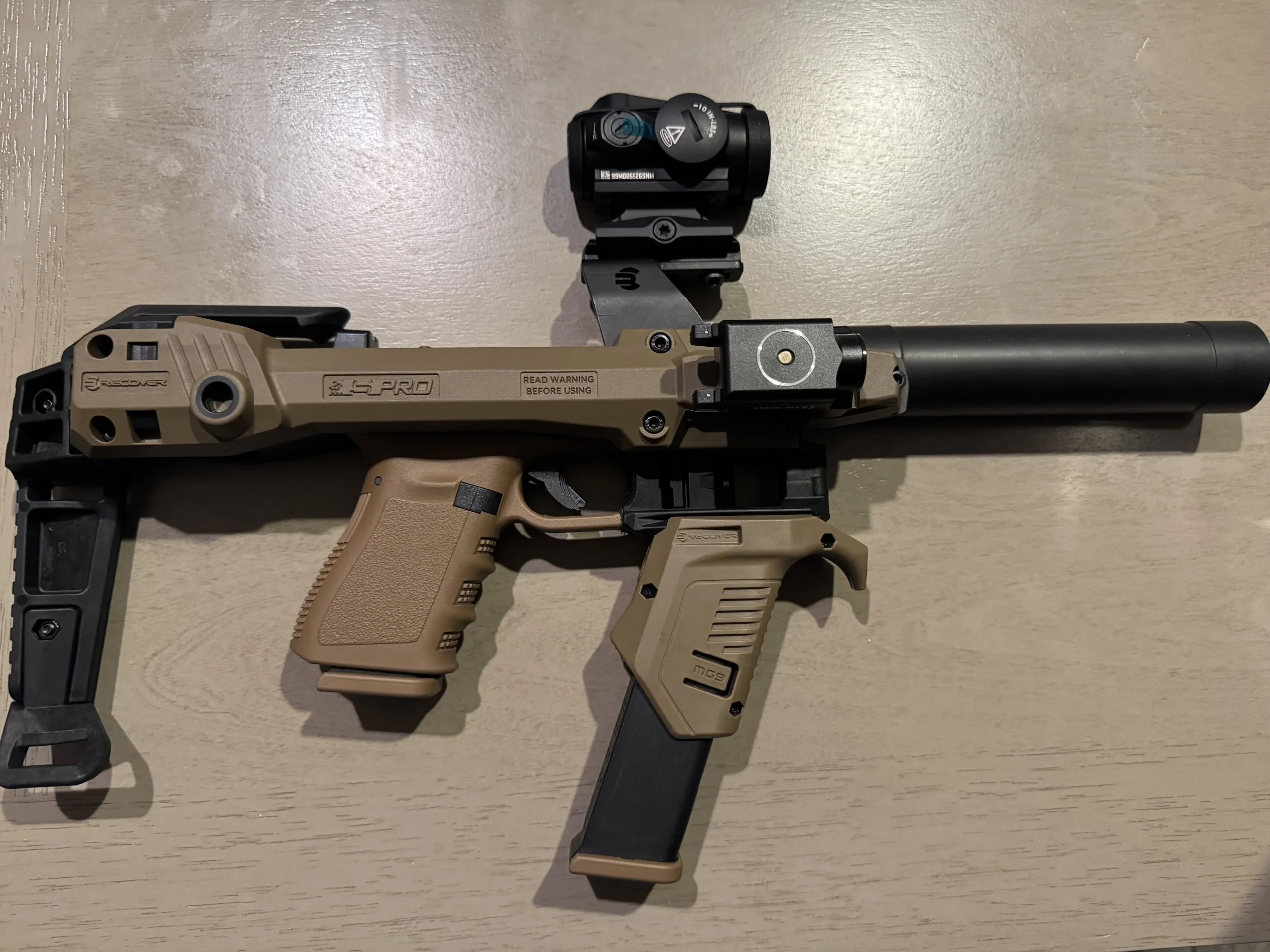
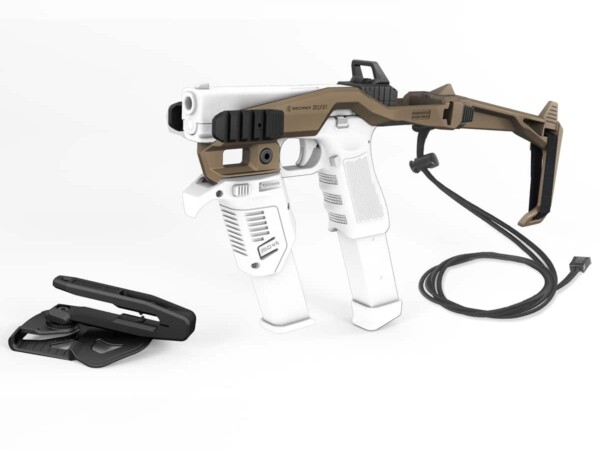
Think of it like an exoskeleton for your Glock 22. It doesn’t replace your frame—it wraps around it, reinforcing your control with a folding brace, giving you a rifle-like shoulder contact point without the legal baggage of a stock (especially under current brace legality standards).
Made from aerospace-grade polymer, the 20/20 installs without tools. You’re not sending your slide off for milling. You’re not committing to a permanent conversion. Just dock your pistol, close the clamps, and you’re good to go.
No gunsmith. No drama.
Why It Works So Well with the Glock 22
The Glock 22 has a few things working against it: strong recoil, muzzle flip, and a slightly top-heavy feel when fully loaded.
The 20/20 kit turns those traits into strengths.
- Recoil Distribution: The brace redirects recoil energy into your body—not your hands—making .40 S&W feel more like 9mm.
- Improved Control: With a third point of contact, you get lateral stability that improves target reacquisition between shots.
- Accuracy Boost: Especially in high-stress drills or home defense scenarios, your ability to deliver follow-ups is what matters most—not theoretical bullseyes.
Real-World Use: Home Defense and Range Training
If your Glock 22 is a bedside gun, adding the 20/20 kit makes a real difference. You’re not fumbling with a loose pistol in the dark. You’ve got a braced platform with an optional sling, light, and even red dot support—ready to stabilize under adrenaline and stress.
At the range? It becomes a training tool. I’ve run Mozambique drills, transitions, even timed hostage scenarios using the 20/20. It’s not just more fun—it’s more effective. I see my splits tighten, and my shot placement improves as fatigue sets in.
And for newer shooters who struggle with recoil? This kit levels the playing field. Instead of managing snappiness with forearm strength, you build confidence through stability.
Add-Ons That Complete the Build
- Thumb Rests: For better indexing and grip consistency.
- QD Sling Mounts: Add single-point or dual-point slings for maneuverability.
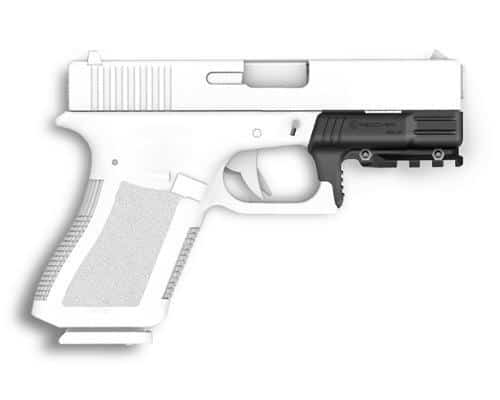
- Optics Rails: Attach red dots, lights, or lasers without milling your slide.
- Charging Handle: Makes racking the slide easier, especially in high-stress conditions or with gloved hands.
All of it fits seamlessly. The system isn’t just modular—it’s cohesive.
Used Gun Market: Police Trade-Ins and Serial Scrutiny
Here’s another legal angle to consider. Police trade-ins are a popular, affordable way to pick up a Glock 22—but always check:
- Serial number integrity (run a check with the dealer or online services)
- Frame condition (cosmetic damage is fine—compromised rails or pins are not)
- Gen-specific compliance (some Gen 3s lack rail slots needed for newer light setups or stabilizer kits)
Don’t assume that just because it came from a police department, it’s clean. Most are—but verify before buying.
The bottom line?
The Glock 22 is still one of the most accessible, powerful handguns available to civilians. And thanks to its modularity, it can be tuned into a serious defense platform using kits like the 20/20.
But you have to know your legal footing.
Because what’s allowed in Texas might get you charged in Massachusetts. And what passed muster last year might be restricted next month.
So read the laws. Ask the right questions. And when in doubt, err on the side of caution.
Because the last thing you want from a personal defense tool… is legal trouble.
Buying a Glock 22 – New vs. Used, What to Know
I’ve bought them both—new and used. And I’ve learned something each time.
When you’re considering a Glock 22, price is almost always part of the conversation. Not because it’s overpriced, but because the used market is absolutely flooded with police trade-ins. And on the surface, it looks like a no-brainer: same model, half the cost. But there’s more to the decision than a dollar sign.
Let’s walk through it.
New Glock 22: What You’re Paying For
If you buy new, here’s what you’re getting:
- Untouched internals – no spring fatigue, no slide wear, no barrel erosion.
- Latest generation – usually Gen 5, which means ambidextrous controls, flared magwell, Glock Marksman Barrel, and rail improvements.
- Warranty protection – Glock stands behind their pistols, and with a new serial, you’re covered out of the gate.
- Mod-Ready from Day One – fewer surprises when adding optics, lights, or stabilizer kits.
The downside? Cost. A brand-new Gen 5 Glock 22 typically runs $500–$600, depending on the shop, location, and local demand. Add tax, transfer fees, and a few upgrades—and you’re creeping toward $800 fast.
Still, for buyers who want that “never been touched” feel and future-proof Gen 5 compatibility, the peace of mind is worth it.
Used Glock 22: Police Trade-Ins and Value Plays
Here’s where the Glock 22 really becomes appealing to budget-minded shooters.
Police departments across the U.S. have cycled out their .40s in favor of 9mm platforms—and that’s left the civilian market flooded with Gen 3 and Gen 4 Glock 22s. Some of them have holster wear. Some have been carried daily but fired rarely. And some are just plain beat up.
But others? Hidden gems.
- Price Range – Trade-ins can run as low as $300–$350. That’s less than a new red dot. And many come with night sights, extra mags, or duty holsters.
- What to Watch For:
- Check slide rails for metal fatigue or excessive wear.
- Inspect barrel rifling—look for sharp, clean lines.
- Verify serial numbers and request background checks (especially from private sellers).
- Confirm mag compatibility and inspect feed lips.
Many of these trade-ins are Gen 3s, which have slightly less rail real estate and internal spring systems that feel “snappier.” That’s not a deal-breaker—just something to factor in if you plan to add a light or stabilizer kit like the 20/20.
Online vs. Local: Where to Buy
You’ve got options:
- Online Dealers (like GunBroker, PSA, or KYGunCo) often have rotating stock of police trade-ins at competitive prices. But you’ll still need to factor in FFL transfer fees—typically $25–$75 depending on the shop.
- Local Gun Stores give you hands-on inspection. You can check the fit, feel, and function before buying. And if you’re a first-time buyer, you get someone to walk you through the process.
Personally? I prefer checking used options in person first. But if I find a verified seller online with solid photos, return options, and buyer protection? I don’t hesitate.
Should You Buy Used? Here’s the Rule I Follow
If you’re buying a Glock 22 for a build project, range use, or home defense and you’re comfortable swapping out springs or upgrading parts—go used. Save the money and invest in performance.
If you’re buying for duty use, EDC backup, or you need Gen 5 compatibility out of the gate—buy new. You’ll skip potential hiccups and future-proof your platform.
The Glock 22 isn’t hard to find. The real decision is whether you want to start with a clean slate—or restore a workhorse that’s already earned its scars.
Either way, you’re holding one of the most proven full-size pistols in American carry history. Just make sure your dollars follow your purpose—not the other way around.
Maintenance and Longevity
If there’s one thing Glock got absolutely right—it’s simplicity.
I’ve cleaned my Glock 22 at kitchen tables, on tailgates, under range tents. No special tools, no complicated steps, no second-guessing. You field strip it once, and you remember it forever. That kind of usability isn’t just convenient—it keeps your firearm alive longer.
But here’s the part many shooters overlook: just because a Glock runs dirty doesn’t mean you should let it.
The Basic Ritual: Field Stripping and Cleaning
It goes like this:
- Drop the mag.
- Check (twice) that the chamber is clear.
- Pull the trigger (safely, of course).
- Tug the slide back a fraction.
- Pull down the tabs.
- Slide it forward and apart.
Done.
From there, you wipe down the barrel, clean the feed ramp, run a patch through the bore, hit the slide rails with a soft brush, and apply a drop or two of oil where metal meets metal.
It takes 10 minutes. Maybe less. And yet most malfunctions I’ve seen on the range come from folks skipping this entirely.
How Often Should You Clean It?
Here’s my take, shaped by experience—not just theory:
- Range Gun: Every 300–500 rounds, or after each range trip. Especially with .40, which tends to burn hotter and dirtier than 9mm.
- Home Defense Setup: Monthly check, even if it hasn’t been fired. Dust, humidity, or oil drying out can affect reliability.
- Duty/Carry Use: Weekly wipe-down and monthly full clean. Holster carry adds lint, skin oils, and environmental grime.
I’ve seen perfectly functional Glocks go years without issue. But I’ve also seen one fail to eject during a timed drill—because a cheap oil thickened in cold temps and slowed the slide.
Do yourself a favor: treat maintenance like loading mags. It’s part of the process, not an afterthought.
Wear and Tear: What Actually Needs Replacing
Glock parts last. But they don’t last forever. And the Glock 22, chambered in .40, wears just a bit faster than its 9mm siblings.
Here’s what to keep an eye on:
- Recoil Spring Assembly
Recommended change: every 5,000–7,000 rounds. Sooner if you’re running hot loads or using a stabilizer brace that changes recoil dynamics. - Slide Lock Spring / Slide Stop Lever Spring
If your slide stops locking back, it’s probably this. Cheap, easy to replace, and often overlooked. - Trigger Spring
Rarely fails—but when it does, it can render your trigger dead. Replace every 10,000 rounds just to be safe. - Magazine Springs
Especially on duty mags left loaded long-term. If your slide starts failing to chamber the first round, this is a likely culprit. - Barrel
Unless you’re running suppressed or shooting steel-cased ammo constantly, your factory barrel will outlive most of your other components. But inspect the feed ramp and rifling periodically for erosion.
Pro tip? Keep a small parts kit in your range bag. Springs, pins, a spare guide rod—it all fits in a pouch and turns a range-day malfunction into a five-minute fix instead of a canceled session.
How Long Does a Glock 22 Last?
With proper care? 50,000 rounds or more. Easily.
I’ve seen Gen 3s from the early 2000s still running fine—original slide, original frame, just a few internal replacements along the way. The polymer doesn’t crack. The slide doesn’t warp. The design resists wear through simplicity, not complexity.
So yes, the Glock 22 is built for the long haul. But like any serious tool, it rewards the owner who respects the upkeep.
The beauty of the Glock 22 isn’t that it’s maintenance-free—it’s that it makes maintenance feel easy. And when something feels easy, you’re more likely to do it right, do it often, and trust the results when it matters most.
Best Scenarios for Glock 22 Use
Some guns are designed to be all things to all people. The Glock 22 isn’t one of them.
It doesn’t hide well under a T-shirt. It’s not the softest shooter in the safe. And it doesn’t care about looking cool on Instagram.
But when it comes to specific roles—serious roles—it earns its place every single time.
1. Home Defense: Confidence When It Counts
Middle of the night. Adrenaline’s high. Your grip is loose, your vision isn’t perfect, and your decisions matter more than ever.
This is where the Glock 22 shines.
- Full-size grip for better control under stress.
- 15-round capacity to outlast multiple threats without a reload.
- Stopping power that doesn’t require follow-up shots just to be effective.
And when paired with the 20/20 Stabilizer Kit, a mounted light, and hollow-point ammo? You’ve built a platform that’s stable, intuitive, and purpose-driven. I keep one beside the bed. Because when seconds matter, you don’t want to be thinking about recoil control—you want muscle memory to take over.
2. Open Carry / Duty Use: Built for the Belt
If you’re carrying in a retention holster or open-carry environment, size is a non-issue. What matters is reliability, accuracy, and presence. The Glock 22 delivers all three.
Its track record with law enforcement wasn’t accidental. It earned its keep in thousands of agencies for over two decades because it could be trusted to run clean, dirty, dry, wet—whatever the shift demanded.
And for those in security, corrections, or open-carry civilian roles, that legacy still applies.
3. Range Practice and Recoil Discipline
Want to improve your fundamentals? Run .40.
Yes, 9mm is cheaper. Yes, it’s easier. But shooting a Glock 22 forces you to build discipline. Your grip has to be tight. Your timing has to be sharp. Your follow-through has to be clean.
And that effort translates. When you can control a Glock 22 through a fast-paced drill, switching to a 9mm feels like switching from varsity to JV.
Add a stabilizer kit, a red dot, or even just upgraded sights, and you’ll notice your precision improving—not because the gun’s easier to shoot, but because you’ve built the skill to handle it.
When It’s Not the Right Fit
Let’s be real—if you’re looking for deep concealment, this isn’t the gun for you. Even with the best IWB holster, it’s bulky. It prints. It pulls. And after a few hours, you’ll be counting down to the moment you can take it off.
Likewise, if you’re new to shooting and looking for something soft, forgiving, or low-maintenance, there may be better entry points. Not because the Glock 22 is unreliable—but because it asks more of you.
And that’s not a bad thing. It’s just a choice.
So Who’s It For?
It’s for the shooter who wants power with purpose.
The homeowner who doesn’t want to overthink their defense plan.
The modder who sees the frame as a foundation—not a finish line.
It’s for people who shoot with intention.
I’ll say it plainly: the Glock 22 isn’t the perfect pistol for every job. But in the right hands, under the right circumstances, it becomes one of the most dependable, versatile, and trustable firearms you can own.
And in a world where so many guns are built for appearances, it’s refreshing to use one that’s built for outcomes.
Is the Glock 22 Still Worth It in 2025?
Let’s cut through the noise.
In a market full of micro-compacts, compensated 9mms, and polymer race guns, the Glock 22 doesn’t scream for attention. It doesn’t need to. It was never designed to be flashy—it was designed to function. And in 2025, that core principle hasn’t changed.
So is it still worth it?
If you’re looking for comfort, concealment, and minimal recoil, you already know this isn’t your match.
But if you want power in a proven platform…
If you want the kind of reliability that doesn’t need hype…
If you want a full-size handgun that punches above its price, responds to upgrades, and adapts to your use case—then yes, the Glock 22 in hand still delivers the authority and reliability that made it a law enforcement standard.
We’ve covered its history.
We’ve looked at the recoil.
We’ve weighed the strengths and weaknesses, broken down its rivals, and walked through the ways it can evolve—especially with the 20/20 Stabilizer Kit turning it into something far more than a sidearm.
You don’t have to guess what this gun can be. You get to build it.
Install the brace. Add a light. Tune the spring. Mount a red dot. Or keep it stock and lean into the skill that comes with mastering a harder-hitting platform.
Because this pistol doesn’t promise ease. It promises readiness.
And if you’re the kind of shooter who prefers results over reputation, that might be exactly what you’ve been looking for.
Have questions about compatibility, installation, or legal use? Reach out to our support team—they’re fast, knowledgeable, and ready to help.