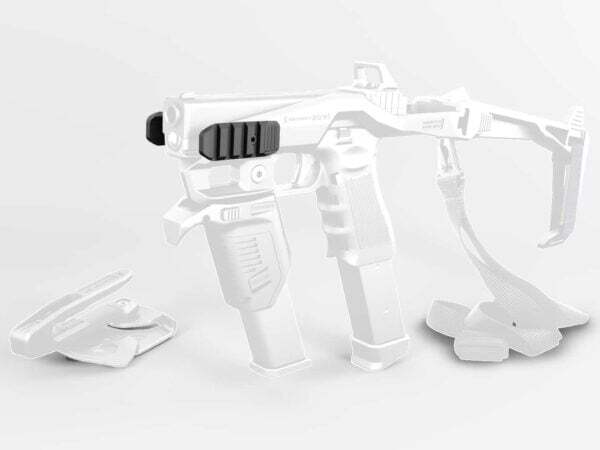
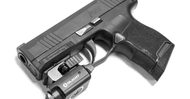
Stop searching through endless forums and incomplete compatibility charts. As engineers who’ve spent over a decade perfecting pistol conversion systems, we get this question daily: “Does Recover Tactical make anything for the Sig P365?”
The short answer hits harder than you might expect. Currently, Recover Tactical doesn’t manufacture stabilizer kits or conversion systems specifically designed for the Sig Sauer P365 platform. But here’s what most P365 owners don’t realize – and why this might actually change sooner than you think.
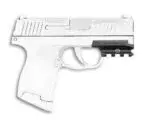
Why the Sig Sauer P365 Presents Unique Engineering Challenges
The Sig Sauer P365 isn’t just another compact pistol. Its micro-compact frame geometry creates specific obstacles that generic stabilizer systems simply can’t address effectively.
Here’s the reality most manufacturers won’t tell you: creating a P365-compatible system isn’t about scaling down existing designs. It requires ground-up engineering specific to Sig’s micro-compact architecture. The Sig Sauer P365’s grip module measures significantly smaller than traditional compact frames, and standard stabilizer mounting points don’t align with its unique proportions.
Unlike Glock platforms where we’ve perfected our 20/20 and S-PRO systems, the P365’s trigger guard geometry requires completely different attachment methodology. Sig’s interchangeable grip modules add another layer of complexity – any proper stabilizer needs to work across P365, P365X, and P365XL variants without compromising structural integrity.
The P365’s lightweight polymer construction demands stabilizer systems that add functional control without creating balance issues during rapid target transitions. This engineering challenge eliminates many materials and design approaches that work perfectly on larger platforms.
Current Alternatives for P365 Tactical Enhancement
While we develop P365-specific solutions, several upgrade paths can immediately improve your pistol’s performance and control:
- Grip Module Upgrades – Wilson Combat and Sig’s enhanced modules offer aggressive texturing that dramatically improves weapon retention during rapid fire
- Optic Integration – Holosun 507K and Trijicon RMRcc red dots cut target acquisition time in half on optic-ready variants
- Extended Magazines – Sig’s 12-round and 15-round options add grip surface while increasing capacity
- Tactical Lighting – Streamlight TLR-6 and Olight PL-Mini 2 provide solid low-light capability for micro-compact frames
The most immediate improvement comes through grip module upgrades. I’ve tested both Wilson Combat and Sig’s options extensively, and the difference in control becomes obvious after the first magazine. These maintain the P365’s concealability while solving the retention issues that plague smooth factory grips.
Extended magazines deserve special attention because they solve capacity limitations without structural modifications. The 15-round magazines effectively transform the P365 into a compact-class pistol while maintaining its slim profile. Just remember that increased capacity changes your concealment requirements.
What We’re Seeing in P365 Conversion Demand
The requests keep coming. P365 owners want rifle-style control in their micro-compact platform, just like our Glock customers achieve with the 20/20 and P-IX systems.
Range performance drives most conversion interest. Shooters consistently mention accuracy limitations at extended ranges – the P365’s short sight radius creates challenges beyond 15 yards that larger platforms don’t face. When you’re used to hitting precise groups with a full-size pistol, the P365’s inherent limitations become frustrating during training sessions.
The demand patterns we’re tracking include:
- Multiple target engagement – Enhanced muzzle control during rapid fire sequences
- Training integration – Systems that work for both carry and range without permanent modifications
- Modular flexibility – Compatibility across the entire P365 family (standard, X, and XL variants)
- Quick reconfiguration – Rapid transitions between carry and training modes
The modular upgrade desire runs deep in P365 ownership. These customers already appreciate Sig’s modular approach with interchangeable grip modules and want similar flexibility in tactical accessories.
The Engineering Reality Behind Sig Sauer P365 Conversion Systems
Creating effective P365 stabilizer systems requires solving problems that don’t exist with larger platforms. The engineering challenges multiply when you’re working with micro-compact dimensions.
Structural mounting points become the first major obstacle. The P365’s compact frame offers limited surface area for secure attachment, unlike Glock platforms where we have generous trigger guard real estate. Any stabilizer system must distribute stress across multiple contact points to avoid frame damage – one mounting point creates stress concentration that can crack polymer frames under repeated use.
Three critical engineering factors separate P365 systems from standard platforms:
- Sight Integration – Suppressor-height sights for optic co-witnessing create interference challenges that don’t exist on standard configurations
- Holster Compatibility – Quick-detach capability becomes essential rather than optional for carry-focused customers
- Material Selection – Standard conversion materials often add too much weight, shifting balance points and affecting handling
Legal considerations require careful attention to overall length requirements across all P365 configurations. Any stabilizer system must maintain compliance in various jurisdictions while accommodating the different barrel lengths across P365 variants.
Why Generic Stabilizer Kits Fail with the P365
You might be tempted to try universal mounting systems or generic stabilizer kits. I understand the appeal – they’re cheaper and available immediately. But here’s why that approach typically creates more problems than it solves with the Sig Sauer P365 platform.
Universal systems assume standard trigger guard dimensions based on full-size pistols. The P365’s unique geometry creates unstable mounting that directly affects accuracy and reliability. I’ve seen customers spend hours trying to achieve secure mounting, only to discover that the system shifts during recoil sequences.
The most common failure points include:
- Mounting instability – Trigger guard mismatch causes accuracy degradation
- Balance disruption – Front-heavy configurations ruin the P365’s handling dynamics
- Component interference – Conflicts with magazine releases, slide stops, and takedown procedures
- Frame stress – Improper mounting creates pressure points that can cause structural failure
Generic stabilizers designed for full-size pistols create front-heavy configurations that negatively impact the handling characteristics that make the P365 attractive in the first place. What works perfectly on a Glock 17 can completely ruin the P365’s balance and responsiveness.
Requirements for Effective Sig Sauer P365 Enhancement Systems
Based on extensive customer feedback and engineering analysis, here’s what a proper P365 stabilizer system must deliver – and why these requirements matter more than marketing specifications.
Modular compatibility across the Sig Sauer P365 family should be non-negotiable. Any worthwhile system must work seamlessly with standard P365, P365X, and P365XL platforms without additional hardware. This protects your investment if you upgrade or add different P365 variants to your collection.
Essential system capabilities:
- Tool-free attachment/detachment – Transitions from carry to range configuration in under 30 seconds
- Optic accommodation – Works with various red dot footprints without sight picture interference
- Enhanced ergonomics – Improves grip consistency while maintaining P365 handling characteristics
- Material durability – Withstands repeated attachment cycles and extended range use
Quick-detach design becomes essential for Sig Sauer P365 owners who need rapid transitions between carry and range configurations. This isn’t a luxury feature – it’s a practical necessity when your pistol serves dual roles.
Current Development Insights
While we can’t share specific product development details, the P365’s popularity hasn’t gone unnoticed in our engineering department. The volume of compatibility requests tells a clear story about market demand.
Our market research reveals fascinating patterns in P365 conversion interest. The platform generates more compatibility questions per unit sold than any other pistol in our database. This suggests that P365 owners are more modification-minded than typical micro-compact customers.
The development considerations we’re tracking include:
- Engineering complexity – Solutions that maintain structural integrity while providing meaningful enhancement
- Testing requirements – Rigorous evaluation matching our Glock platform standards
- Regulatory compliance – Designs that work within existing legal frameworks
- User experience – Complete ownership experience from installation through thousands of rounds
Any P365-compatible system must undergo the same rigorous testing that made our Glock platforms industry leaders. We won’t release products that meet basic functionality requirements – they must exceed the performance standards customers expect from Recover Tactical engineering.
Maximizing Current Sig Sauer P365 Potential
Until P365-specific stabilizer systems become available, several proven approaches can improve your pistol’s tactical capability without waiting for new product releases.
Professional training often provides more dramatic improvement than hardware modifications. Advanced pistol courses that focus specifically on micro-compact handling teach techniques that maximize the P365’s inherent strengths while minimizing its limitations. The investment in skills pays dividends that hardware alone can’t match.
Immediate improvement strategies:
- Match-grade ammunition – Can dramatically improve accuracy, especially at extended ranges where the P365’s short sight radius creates challenges
- Grip enhancement – Aggressive grip tape or professional stippling improves weapon retention during rapid fire
- Maintenance optimization – Micro-compact pistols require more frequent attention than full-size platforms
- Skill development – Focus on techniques that work specifically with micro-compact handling characteristics
Ammunition selection makes a more significant difference in P365 performance than many owners realize. Take time to test various loads – the optimal combination for your specific barrel might surprise you and provide accuracy improvements that rival hardware modifications.
Why Patience Pays Off
The tactical accessory market floods customers with “quick fix” solutions for popular pistols. I’ve watched this pattern repeat with every major platform release – rushed products that promise immediate solutions but deliver disappointing results.
Quality P365 systems require significant development investment that goes beyond basic compatibility. The reduced mass and tighter tolerances of micro-compact platforms mean that inadequate testing reveals itself quickly through field failures and customer frustration.
The advantages of waiting for properly engineered solutions:
- Engineering investment – Proper development addresses P365-specific challenges rather than adapting existing designs
- Comprehensive testing – Systems proven under real-world stress rather than just controlled environments
- Material optimization – Components selected specifically for micro-compact stress patterns
- User experience focus – Complete ownership experience considered from installation through long-term use
Well-engineered systems account for the complete ownership experience, from initial setup through thousands of rounds of use. Generic systems often overlook critical usability factors that become obvious only after extended use.
The Future of Sig Sauer P365 Enhancement
The P365 platform continues evolving rapidly, and tactical accessory compatibility will follow these developments. Understanding these trends helps predict what enhancement options might emerge.
Standardized mounting approaches may emerge as P365 variants mature and the platform stabilizes. This evolution could enable more universal accessory compatibility across the entire P365 family, similar to how Glock’s consistent design language enabled broad accessory support.
Potential development directions include:
- Integrated systems – Future P365 variants with built-in stabilizer mounting points
- Modular approaches – Component-based systems allowing customized enhancement levels
- Technology integration – Smart accessories with integrated optics, lasers, or performance monitoring
- Material innovation – Advanced composites that provide strength without weight penalties
Component-based systems could offer the customization flexibility that P365 owners clearly desire, allowing users to select specific improvement levels without committing to full conversion system complexity.
Making the Right Sig Sauer P365 Enhancement Decision
Your P365 serves specific purposes in your tactical toolkit, and any enhancement should support those primary functions rather than compromise them. The decision process becomes more critical with micro-compact platforms because the margin for error is smaller.
If concealed carry represents your P365’s primary mission, enhancement systems must preserve that core capability. Quick-detach mechanisms aren’t just convenient – they’re essential for maintaining the versatility that makes the P365 valuable.
Key decision factors:
- Primary use case – Carry, training, or dual-purpose requirements
- Budget considerations – Total cost including accessories and training
- Skill development needs – Hardware supplements, doesn’t replace fundamental shooting skills
- Platform compatibility – Future-proofing for potential P365 variant additions
Sometimes investing in a dedicated range pistol provides more capability than complex conversion systems. The math isn’t always obvious – factor in the total cost of ownership including accessories, training, and maintenance requirements.
The tactical enhancement landscape for micro-compact pistols continues developing rapidly. While current P365 options remain limited compared to Glock platforms, this situation presents opportunities for innovative solutions that address the platform’s specific challenges.
Stay connected with us for updates on P365 compatibility developments. When engineering solutions emerge that meet our quality standards, P365 owners will be among the first to know. Until then, focus on maximizing your current platform’s potential through proven enhancement methods that work within the P365’s design parameters.
Your P365 already delivers exceptional performance in its designed role. Any enhancement system should build on that foundation rather than compromise it. The wait for properly engineered solutions will be worth it when systems emerge that truly enhance rather than simply modify your pistol’s capability.